Guides / Estimates
What the client's estimate looks like
A designed page on your letterhead with the finishes you ticked, the line items behind each one, and a plain sentence saying nothing on it is binding.
What you need first
- An approved estimate and its link
By the end of this guide you know exactly what your client opens, so you can talk them through it on the phone without guessing. Casework's name is on none of it.
They open the link
No login, no password, no account. The link resolves to this one estimate for this one job.
The page opens on your letterhead: your name or your mark at the head, your accent colour on the rules and the figures, set in the document typeface you chose.
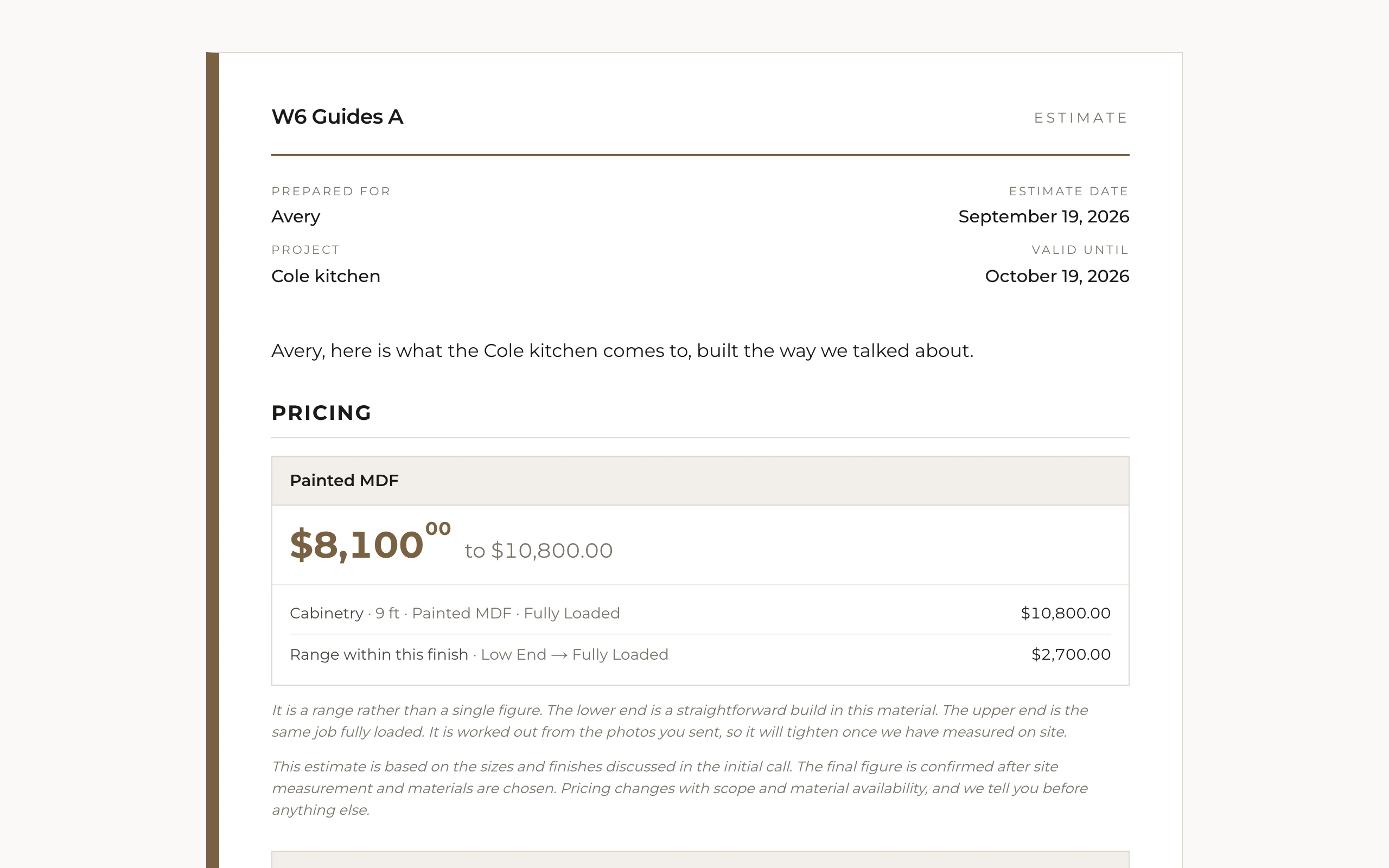
- 1Your name and your colour. Casework appears nowhere
- 2One band per finish you ticked
- 3The range: the cheapest and priciest rung of that finish
They read who it is for and how long it holds
Under the masthead: Prepared for and their first name, the Project, the Estimate date and Valid until, which is counted from the issue date using the number of days you set in your terms.
Then a sentence naming them and the job.
They read the pricing
Under Pricing, one block per finish you ticked, each headed with the family. The range is set large, then the line items behind it: the cabinetry with its feet and its finish, and the spread within that finish from its cheapest rung to its priciest.
Where you added lines, they print here and carry the same figure under every family. Where you wrote a note, it prints under the pricing.
They read what it is and is not
Under the figures, in italics: that it is a range rather than a single figure, that the lower end is a straightforward build in that material and the upper end is the same job fully loaded, and that it is worked out from the measurements they gave and confirmed on site before anything is cut.
Under that, whatever you wrote in Settings, Terms, the Document text card: the small print under the price, how the project runs, the warranty, a thank you, your contact block. Every one of those blocks prints only if you wrote it, and the page is simply shorter where you did not.
They keep it
There is a print button on the page, and the print styles are real, so a client who wants a PDF makes one from their own browser. Nothing is emailed as an attachment and there is no file to lose.
The link closes after seven days. If they come back late, reissue it from the job rather than extending it.
What happens next
The estimate is the first paid step of the conversation, not the last. The Design agreement guides cover what comes after a client says yes to a range.